On this page
Style 1
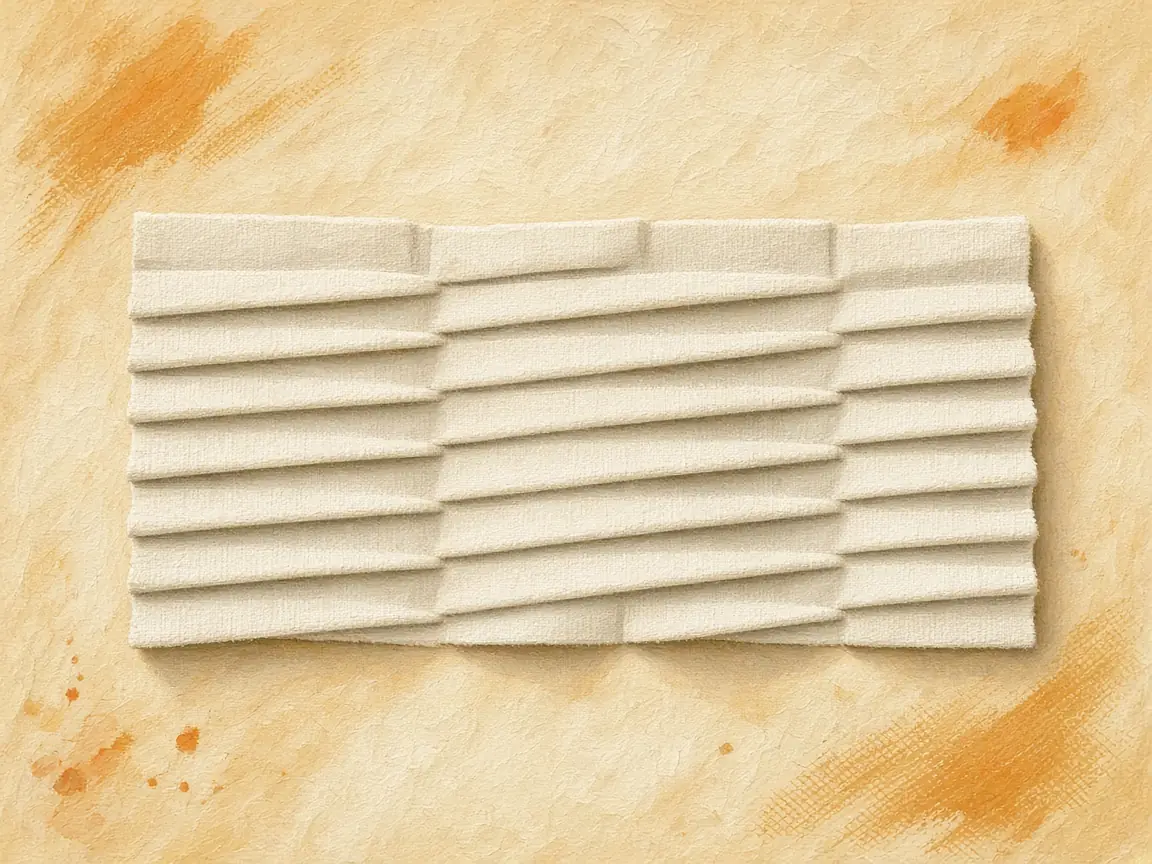
Knife pleats
Every pleat folds in the same direction, like the blades of a stack of knives. Knife pleats are the pleats of kilts, tennis skirts and school uniforms. They give a crisp, directional swing and move well when you walk.
- Folds: one mountain fold and one valley fold per pleat.
- Fabric: visible width P plus 2 × depth D. At full depth (D = P), that equals three times the finished waistband width.
- Best in: wool suiting, gabardine, polyester blends that hold a crease.
Style 2
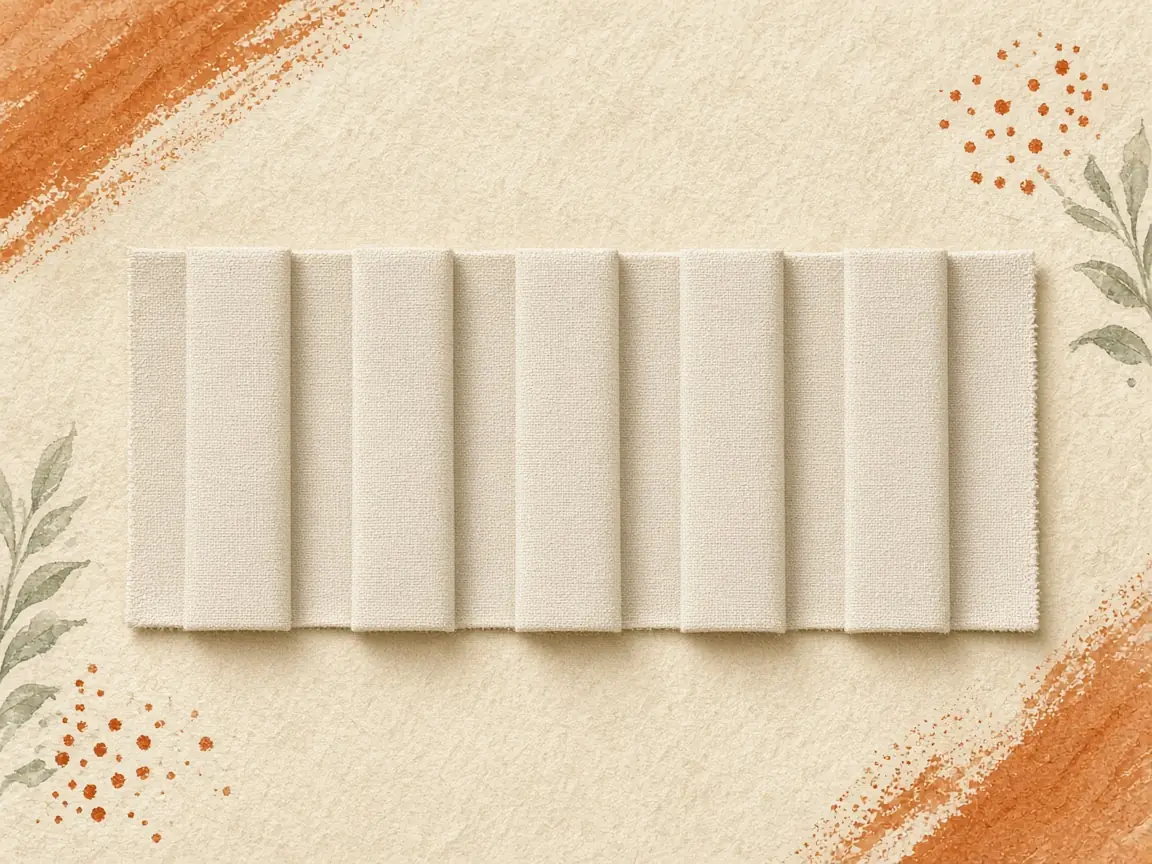
Box pleats
Two knife pleats fold away from each other, leaving a flat "box" on the outside and the folds meeting behind it. Box pleats look structured and symmetrical and add volume at the hem without bulk at the waist.
- Folds: two mountain folds facing outward, two valley folds behind.
- Fabric: the exact same P + 2D per pleat as knife pleats.
- Best in: cotton twill, denim, linen, upholstery-weight fabrics for cushions and valances.
Style 3
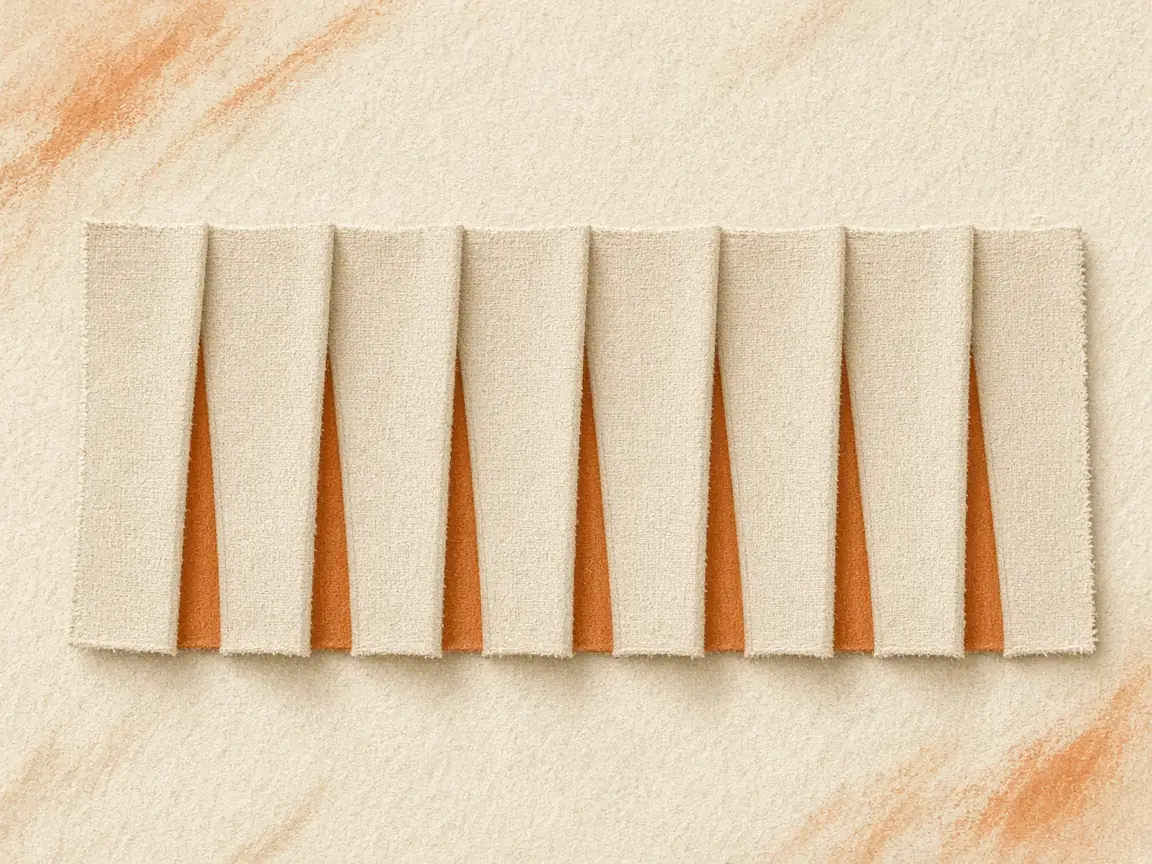
Inverted pleats
An inverted pleat is simply a box pleat reversed: the two folded edges meet in the centre on the right side of the garment. It is a staple at the centre back of skirts and coats, providing tailored walking room while keeping a sleek, flat profile.
Diagram
The folds in cross-section
Seen from the top edge, every style is the same three layers of fabric per pleat — the visible face plus the two layers of the underfold. Only the direction each fold turns changes.
That is why the fabric needed per pleat is identical: P + 2D.
Compare
Side-by-side comparison
The last row is real output from the pleat calculator for a 28" waist with 1 1/2" full-depth pleats.
| Feature | Knife | Box | Inverted |
|---|---|---|---|
| Fold direction | All one way | Away from centre | Toward centre |
| Look | Swishy, sporty | Structured | Flat, tailored |
| Fabric per pleat | P + 2D | P + 2D | P + 2D |
| Bulk at waist | Even | Concentrated behind folds | Concentrated in front |
| Typical use | Kilts, tennis skirts | A-line skirts, valances | Centre back vents, coats |
| 28" waist, 1 1/2" pleats | 19 pleats · 85 1⁄4" flat | 19 pleats · 85 1⁄4" flat | 19 pleats · 85 1⁄4" flat |
How to
How to mark and fold pleats
- Hem the fabric first if the hem is straight.
- Print the 1:1 marking ruler from the pleat calculator and transfer fold marks to the top and bottom edges using chalk or small snips.
- Fold each mountain line (solid) and bring it to its valley line (dashed).
- Pin at top and bottom, press with a damp press cloth, and baste across the waist.
- Check the pleated width against your waistband before stitching.
Sizing
Choosing pleat width and depth
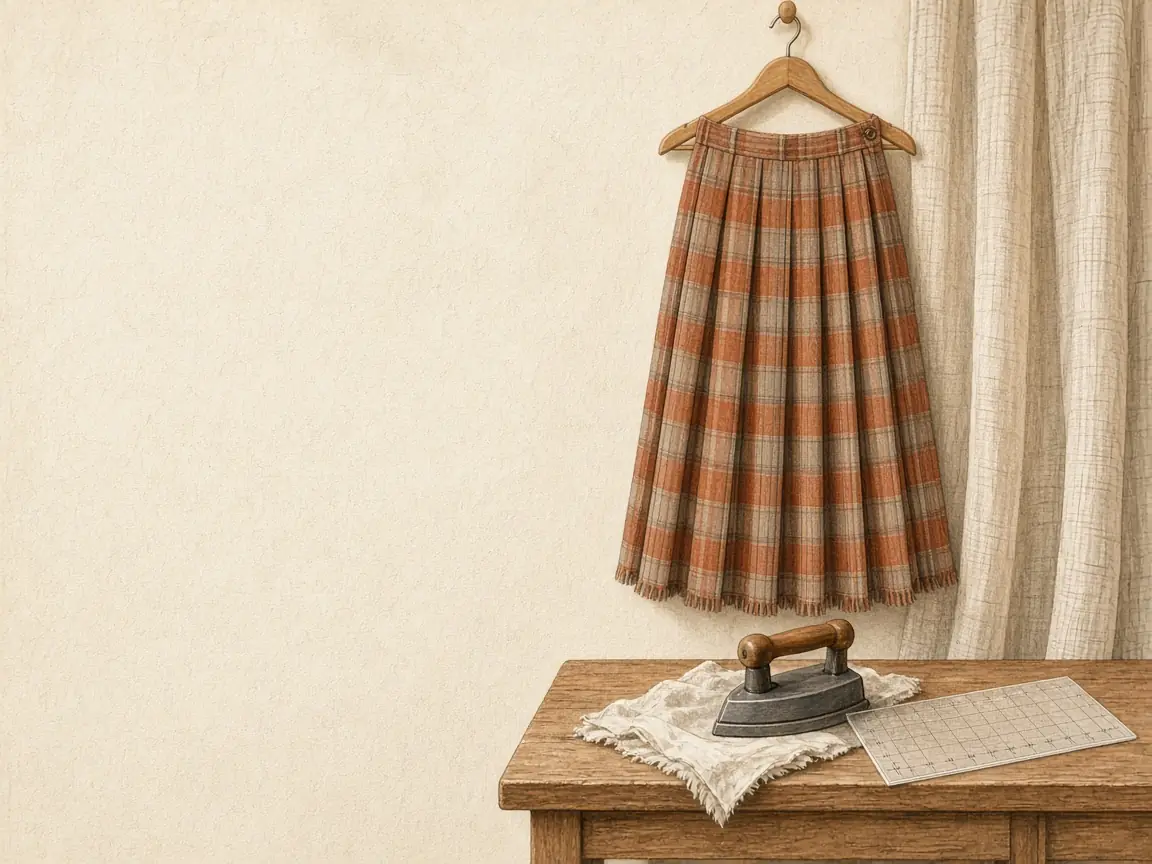
Smaller pleats (1/2"–1") look refined; wider ones (2"+) look bold. Shallow pleats (D below P) save fabric and reduce bulk — useful for heavier wool. For plaids, match the pleat width to the plaid repeat.
If you prefer soft gathers or fluid flare over crisp folds, plan tiers with our tiered skirt calculator or calculate your pattern using the circle skirt calculator.