Skirt Calculator

Free calculator · gathered & ruffle tiers

Tiered Skirt Calculator (Gathered & Ruffle Tiers)

Plan a 2, 3 or 4 tier skirt in minutes. Set the top width, tier heights and gathering ratio — get every tier's cut width, how many strips to cut across your fabric and the total yardage.

  • 2–4 tiers
  • 1.5× to 2.5× fullness
  • Strip count & yardage
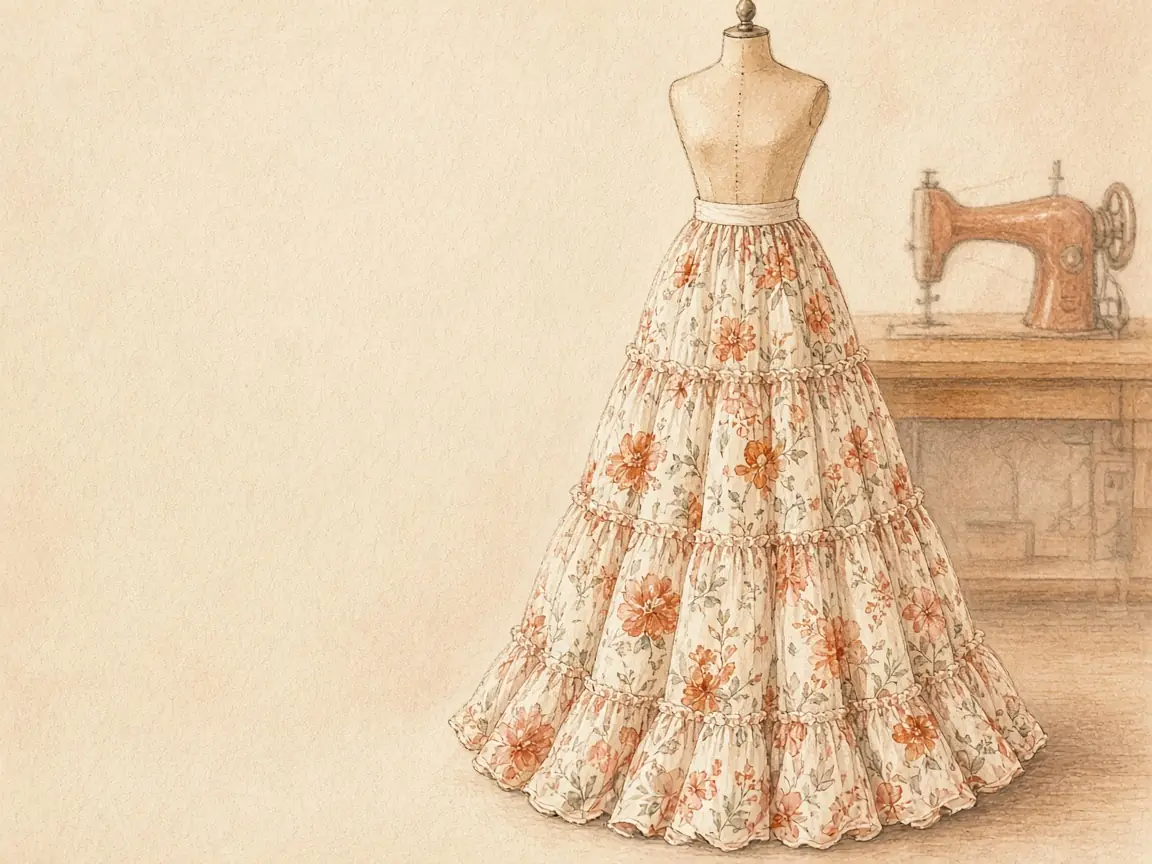
Illustration of a long floral tiered skirt on a dress form beside a sewing machine
Units
Tiers
Gathering ratio
×
Any ratio from 1× to 4×
in
Hip + ease for elastic waists, or waistband length × ratio for a gathered waist
in
in
in
in
in
in
in
Fabric to buy
1 5/8 yd
1.5 m
Finished length
24"
Hem circumference
90"
Strips to cut
6
across the fabric width
TierTotal widthStrips × size to cutGathers onto
140"1 × 41" by 8"waist / elastic
260"2 × 31" by 9"40"
390"3 × 31" by 10 1⁄2"60"

Tier proportions

Tier 1 · 40"Tier 2 · 60"Tier 3 · 90"

Strip widths include side seam allowances; heights include seam and hem allowances.

  • Free, no sign-up
  • Runs in your browser — nothing uploaded
  • Per-tier cut table
  • Inches & centimeters

Gathering ratio

How full should each tier be?

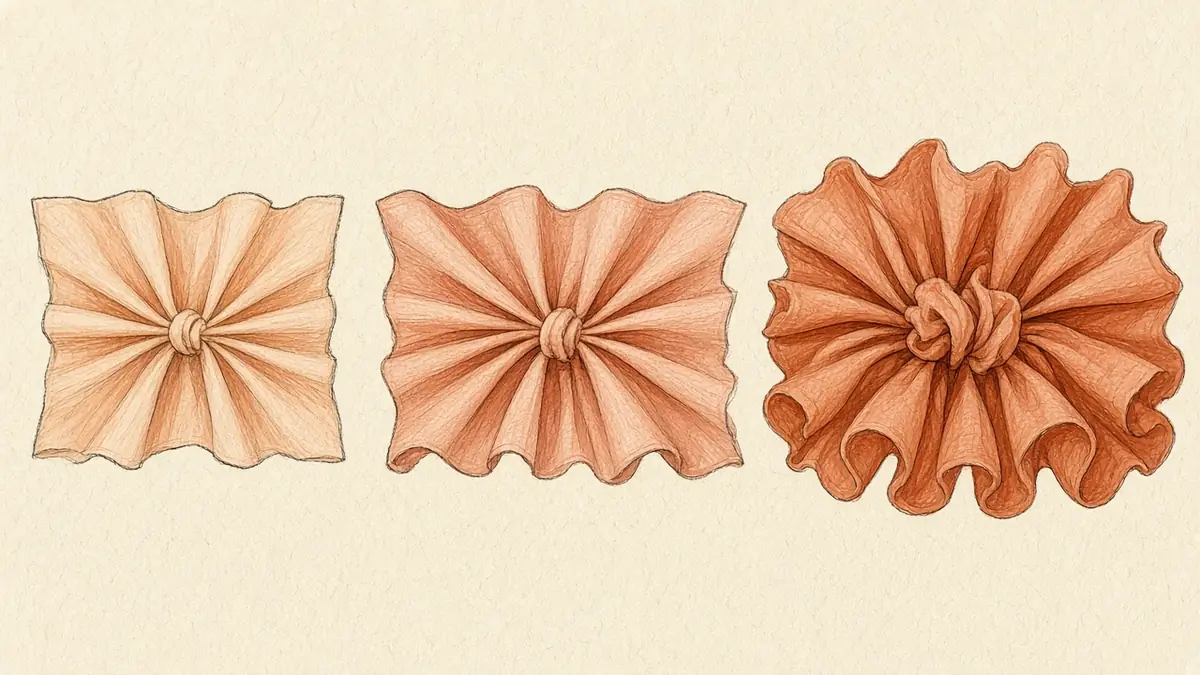
The ratio is how much wider each tier is than the one above it. All three cards are the same 3-tier skirt — 40" top, 7/8/9" tiers, 45" fabric — only the ratio changes.

Illustration of three fabric rosettes gathered from light to very full
  • 1.5×

    Soft & light

    Gentle ripples that hang close to the body. Best for drapey cotton lawn, rayon and voile, and the easiest to gather evenly.

    Tiers 40" → 60" → 90"
    6 strips · hem 90" · 1 5/8 yd

    Open 1.5×
  • 2×

    Classic ruffle

    The prairie-skirt look most patterns use. Clearly gathered, still easy to wear, works in quilting cotton and linen.

    Tiers 40" → 80" → 160"
    7 strips · hem 160" · 2 yd

    Open 2×
  • 2.5×

    Extra full

    Petticoat and costume volume. Use light fabric — tulle, chiffon, batiste — or the seams get bulky and heavy.

    Tiers 40" → 100" → 250"
    10 strips · hem 250" · 2 3/4 yd

    Open 2.5×

How it works

A tiered skirt in four steps

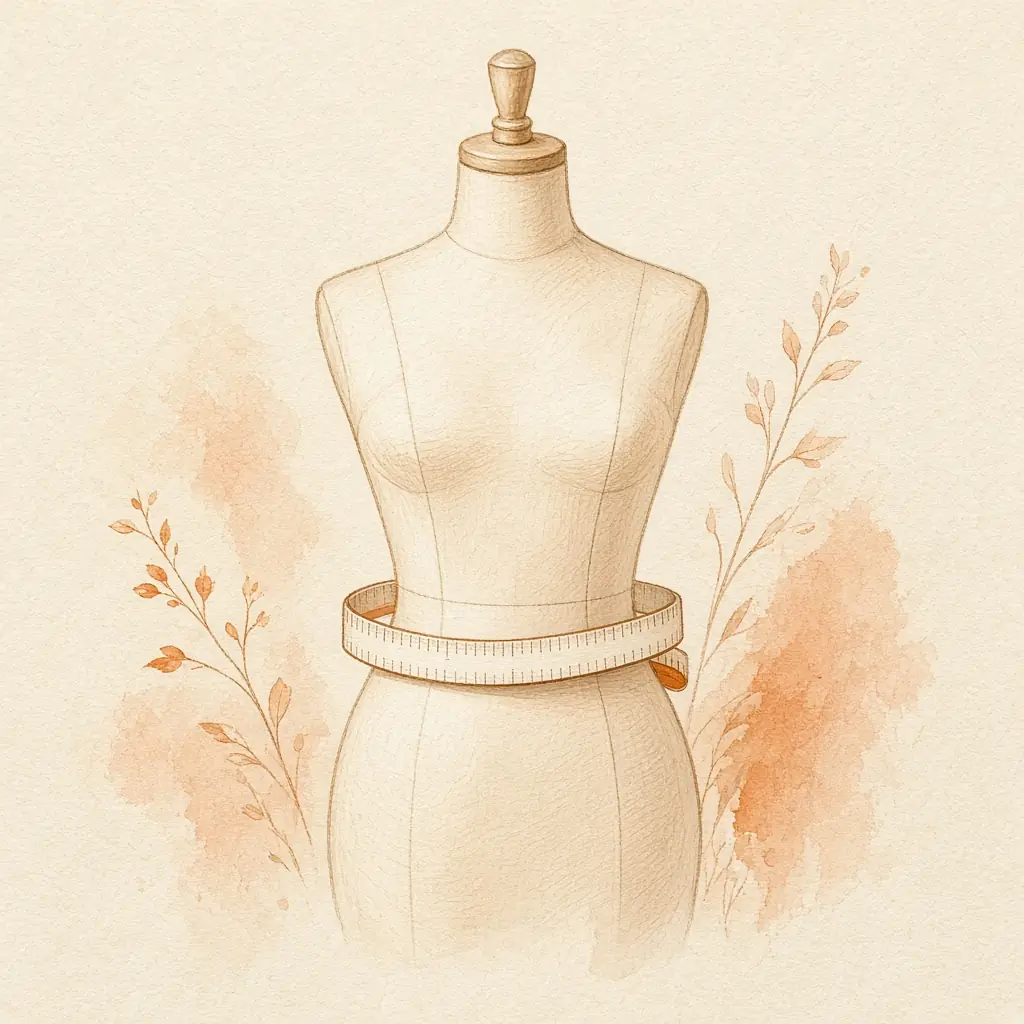
  1. Illustration of a dress form with a tape measure around the waist

    Step 1: Measure the top

    For an elastic waist, take your hip plus a little ease. For a fitted yoke or waistband, use that length × the ratio.

  2. Illustration of hands holding a phone with a calculator app

    Step 2: Set tiers & ratio

    Pick 2, 3 or 4 tiers, a finished height for each and a gathering ratio between 1.5× and 2.5×.

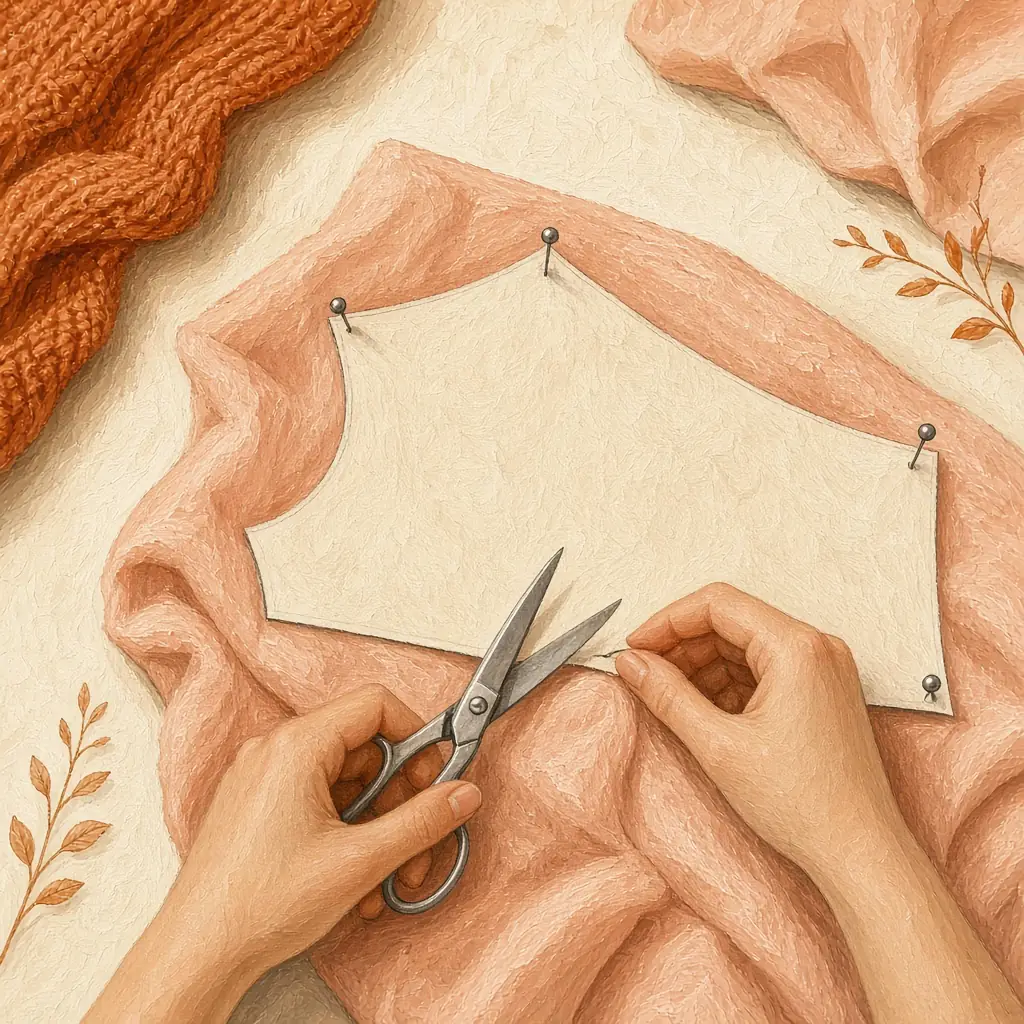
  3. Illustration of hands cutting fabric around a pinned paper pattern

    Step 3: Cut the strips

    The table lists every tier's cut height, width and how many selvage-to-selvage strips to join.

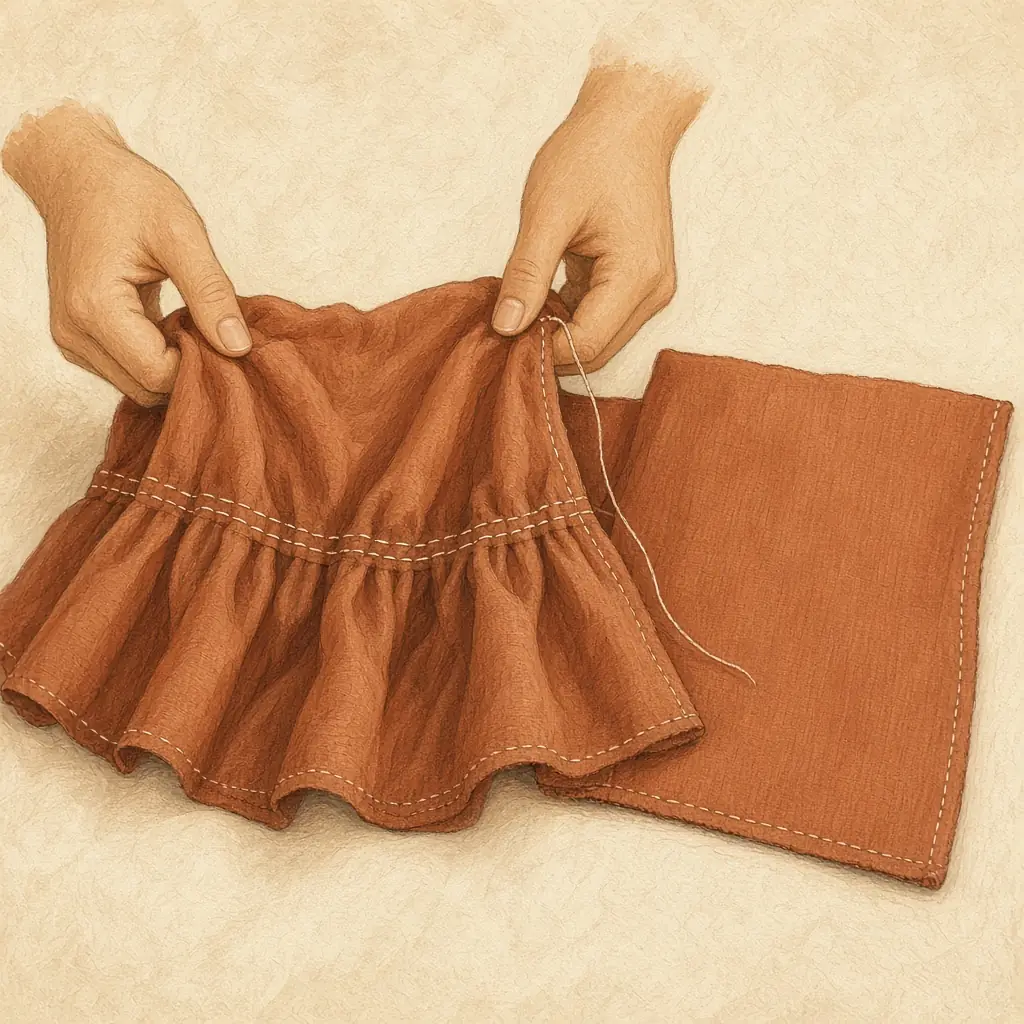
  4. Illustration of hands pulling gathering threads on a rust tier next to a flat strip

    Step 4: Gather & join

    Join each tier into a loop, gather it to the width of the tier above and stitch with the seam allowance shown.

Use cases

Three tiered skirts, three sets of numbers

Each row opens the calculator with these exact settings, so you only adjust your own measurements.

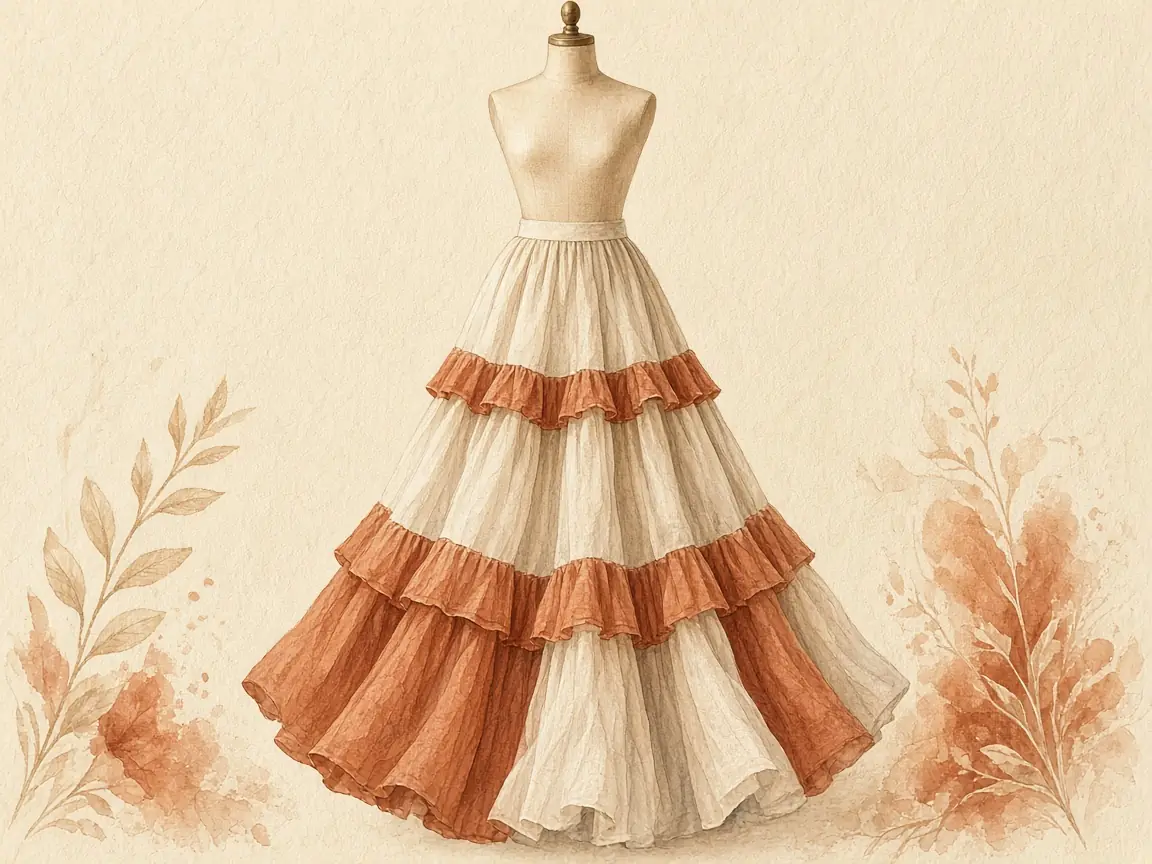
Illustration of a cream boho maxi skirt with rust ruffled tiers on a dress form

Boho maxi

Four-tier boho maxi skirt

Long and swishy without being heavy: a 42" elastic top, tiers of 8, 9, 10 and 11" at 1.5× on 45" fabric. Finished length 38", hem 141 3⁄4", 10 strips — buy 3 1/8 yd.

Tier-by-tier widths

Cut widths 42" → 63" → 94 1⁄2" → 141 3⁄4". Graduated heights make the lower tiers look balanced; the deepest tier carries the hem.
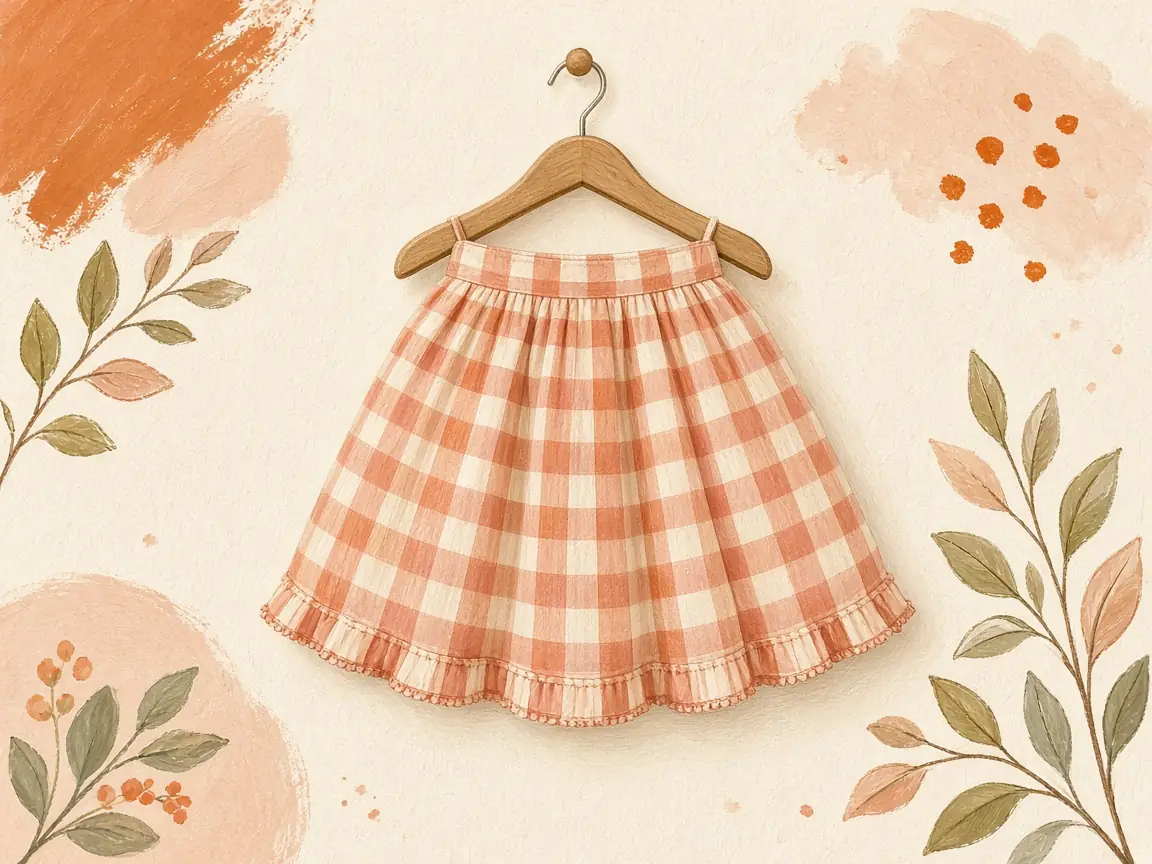
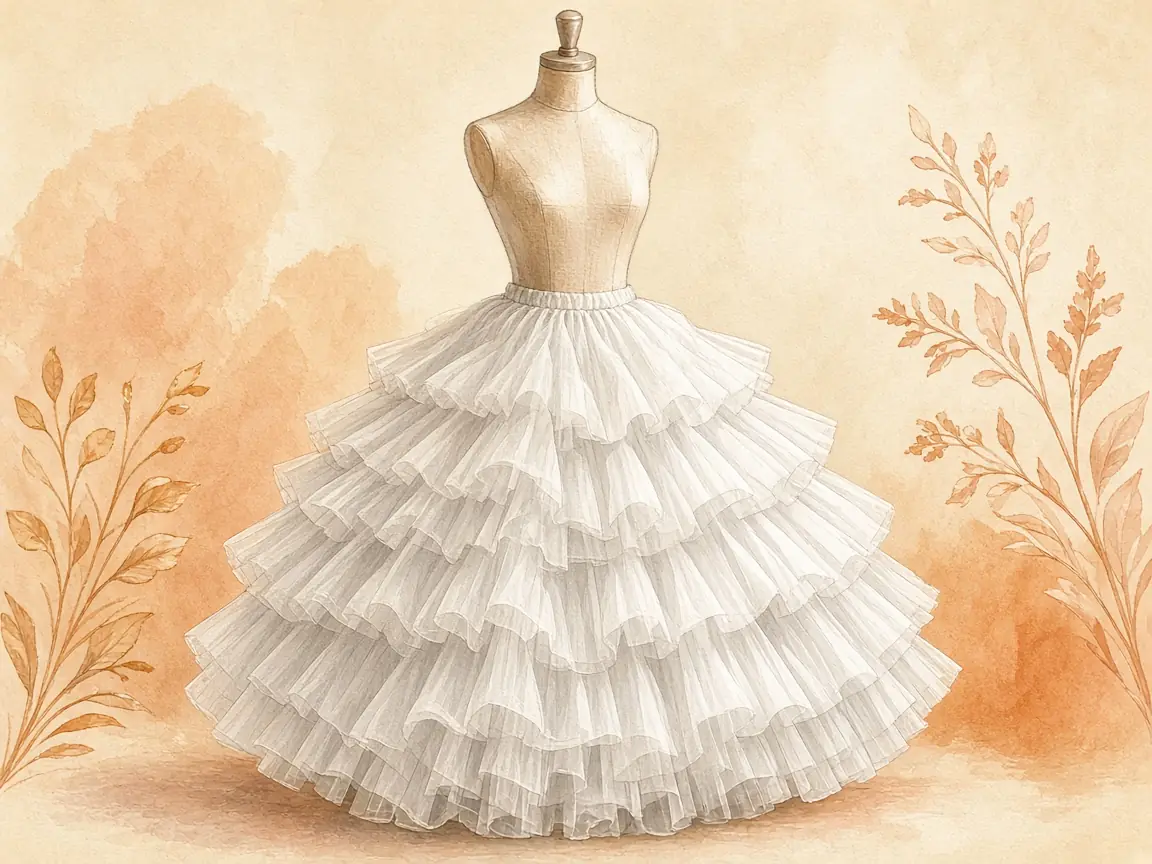
Illustration of a small gingham gathered skirt on a hanger

Kids

Twirly kids’ skirt

A 28" top with short 4, 5 and 6" tiers at 1.75× gives a 15" skirt with plenty of twirl. It needs just 5 strips and 1 yd of 45" cotton.

Sizing for growth

Add 1–2" to the bottom tier and turn up a deeper hem — let it down next year instead of sewing a new skirt.

Illustration of a white ruffled petticoat on a dress form

Cosplay & petticoat

Full cosplay petticoat

Four tiers at 2× from a 30" top builds real volume under a costume skirt: 18" long with a 240" hem. On 60" tulle that is 11 strips and 1 7/8 yd.

Layering tip

Repeat the two lowest tiers as a second layer for even more lift — the calculator's table gives you their widths directly.

Worked example

Real calculator output, tier by tier

Worked example

Three-tier skirt at 1.5×

Top tier width
40"
Tier heights
7" / 8" / 9"
Ratio
1.5×
Fabric width
45"
Open in calculator

Result

Tier widths
40" → 60" → 90"
Strips to cut
6
Finished length
24"
Fabric to buy
1 5/8 yd (1.5 m)

Same skirt in centimetres (100 cm top, 18/20/23 cm tiers, 115 cm fabric): 1.2 m (1 3/8 yd). A 2-tier version of the inch skirt needs only 3/4 yd.

The math

Tiered skirt formula

tier 1 width = top width
tier n width = tier (n − 1) width × ratio
cut height = finished height + 2 × seam allowance (+ hem on the last tier)
strips = ceil(tier width ÷ (fabric width − 2 × side SA))

Every tier is a straight rectangle, so there is no curve to draft — the only decisions are how wide each loop is and how many fabric widths it takes. Widths grow geometrically, which is why the bottom tier dominates the yardage.

Show the 1.5× example step by step

Tier 1 = 40". Tier 2 = 40" × 1.5 = 60". Tier 3 = 60" × 1.5 = 90". With 1/2" seams and a 1" hem the cut heights are 8", 9", 10 1⁄2". On 45" fabric each strip holds 44" after side seams, so the tiers take 1 + 2 + 3 = 6 strips and 57 1⁄2" of fabric, rounded up to 1 5/8 yd.

Tips

Tips for gathering tiers

  • Two rows of basting

    Run two parallel gathering stitches inside the seam allowance and pull the bobbin threads together — fewer snapped threads, straighter gathers.

  • Quarter-mark both edges

    Pin the gathered tier to the one above at quarters (or eighths) so the fullness spreads evenly around the skirt.

  • Make tiers grow

    Lower tiers look best slightly deeper than upper ones. Equal tiers can make a skirt look top-heavy.

  • Prefer crisp folds?

    Pleats instead of gathers: try the pleat calculator. For flare with no gathers, the circle skirt calculator.

Frequently asked questions

How do you calculate fabric for a tiered skirt?

Start with the top tier width (hip plus ease for elastic). Each tier below is the one above × the gathering ratio. Add seam allowances to every tier height and the hem to the last, then divide each width by your usable fabric width to get the number of strips.

What gathering ratio should I use for a tiered skirt?

1.5× gives a soft, light gather; 2× is the classic ruffled look; 2.5× is very full and best for light fabrics such as tulle or chiffon.

How much fabric do I need for a 3-tier skirt?

With a 40" top, 7/8/9" tiers and 45" fabric: 1 5/8 yd at 1.5×, 2 yd at 2× and 2 3/4 yd at 2.5×.

Should the tiers be the same height?

They can be, but graduating them — each tier a little deeper than the one above — usually looks more balanced. Set each tier height separately in the calculator.

Do I cut tiers across the fabric or along it?

Usually selvage to selvage, across the grain, joining as many strips as the calculator lists. For very long tiers in a border print, cut along the length instead.

What width should the top tier be for an elastic waist?

At least your hip plus 2–4" of ease so it pulls on comfortably. For a fitted waistband, multiply the waistband length by your ratio.

Ready to plan your tiers?

Enter the top width, tier heights and ratio — get every cut width, the strip count and yardage in seconds.