Skirt Calculator

Free calculator · continuous bias binding

Continuous Bias Tape Calculator

Enter how much binding you need and your strip width — get the exact fabric square to cut, how much tape it yields, and the finished single- and double-fold widths. A hem helper measures circle skirt hems for you.

  • Square size & yield
  • Single & double fold
  • Circle skirt hem helper
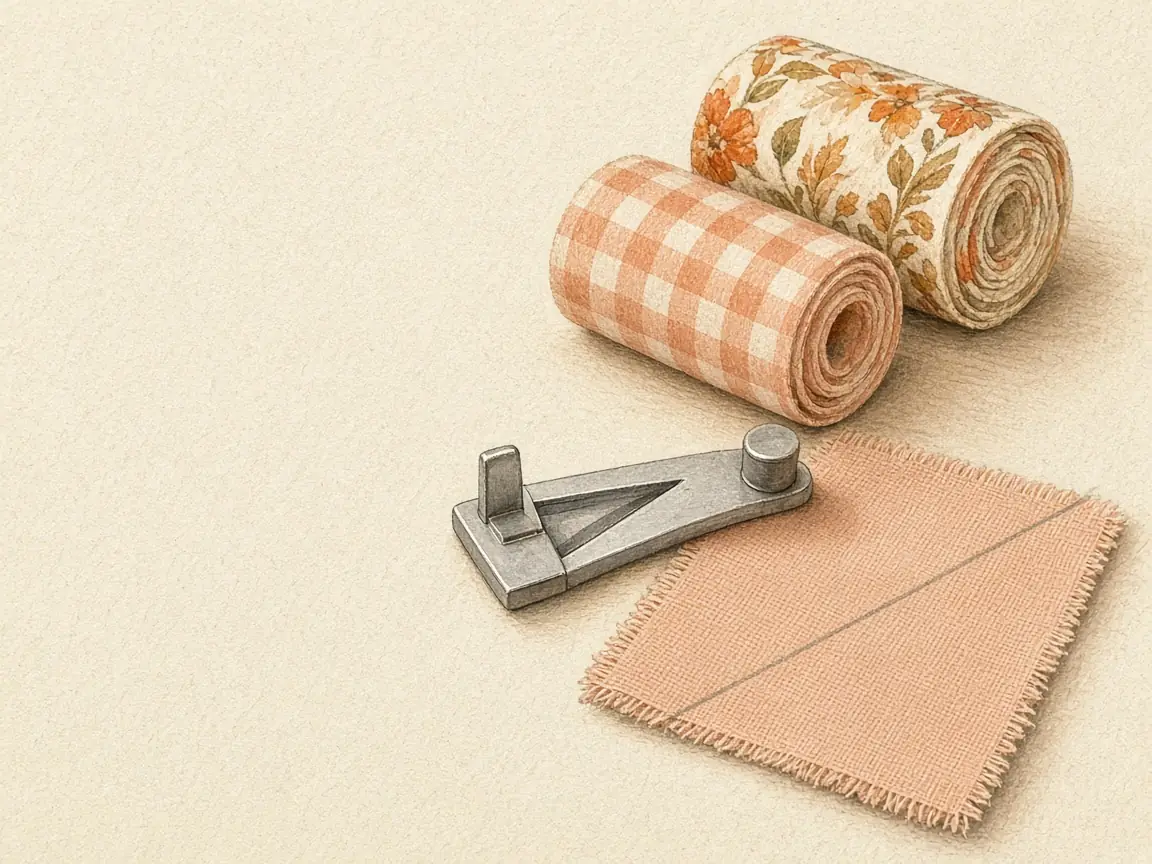
Illustration of rolls of gingham and floral bias tape beside a bias tape maker and a fabric square
Units
in
add 10 in / 25 cm for joins and corners
in
2" makes 1" single-fold or 1/2" double-fold
Circle skirt hem length helper
Skirt
in
in

Hem length: 166 1⁄4"

Fabric square
20" × 20"
exact 19 1⁄2"
Continuous bias yield
200"
5.56 yd
Single-fold width
1"
Double-fold width
1⁄2"
20" squarecut diagonal
  1. Cut a 20" square and slice it corner to corner.
  2. Sew the two triangles into a parallelogram along the straight-grain edges.
  3. Mark lines 2" apart parallel to the bias edges.
  4. Join the short ends offset by one strip to make a tube, then cut along the line in one spiral.
  • Free, no sign-up
  • Runs in your browser — nothing uploaded
  • Continuous method, one square
  • Inches & centimeters

The continuous method

One square, one long strip of bias tape

Instead of cutting and joining dozens of short strips, you sew a single square into a tube and cut it in one spiral. Here is how 20" of fabric becomes about 200" of tape.

  1. cut corner to corner

    Cut the square

    Cut the square the calculator gives you and cut it once along the diagonal into two triangles.

  2. sew straight edges

    Make a parallelogram

    Place the triangles right sides together on a straight-grain edge and sew a 1/4" seam. Press it open.

  3. mark strip width

    Mark the strips

    Draw lines parallel to the long bias edges, one strip width apart — 2" for the default.

  4. offset, sew, cut spiral

    Offset & cut

    Bring the short edges together with the lines offset by one strip, sew into a tube, then cut along the line in one continuous spiral.

The 5% extra in the formula covers the seam and the offset at the ends of the tube.

Single vs double fold

Which fold do you need?

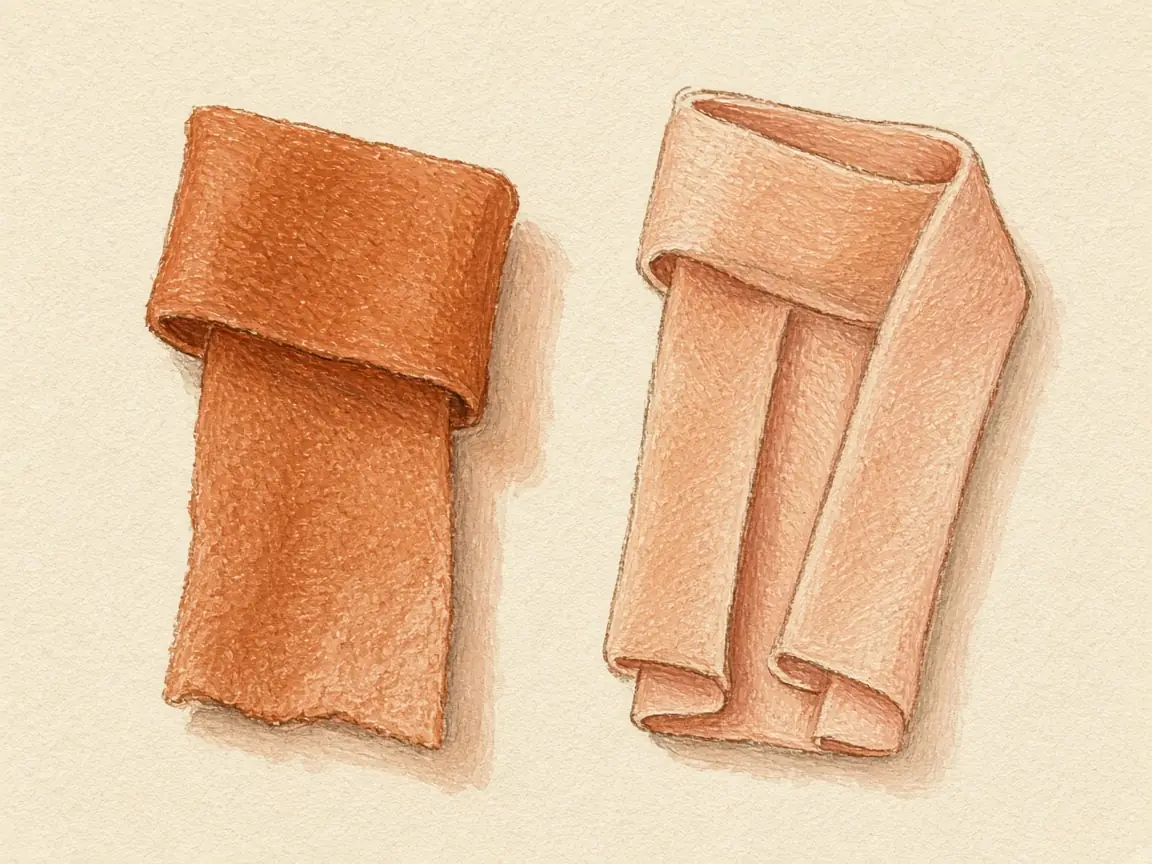
Illustration of two orange fabric tapes, one single folded and one double folded

Fold widths

Single fold faces, double fold binds

Fold both long edges to the centre for single fold — half the strip, 1" from a 2" strip. Fold it again for double fold — a quarter, 1⁄2" — which wraps a raw edge and shows on both sides.

Strip widths for common tapes
  • 1/2" double fold (most quilts and hems): cut 2" strips.
  • 1/4" double fold (necklines, armholes): cut 1"–1 1/4" strips.
  • 5/8" double-fold quilt binding: cut 2 1/2" strips and fold in half instead (French binding).
Where to use it

Three common bias tape projects

Each row opens the calculator with the length and strip width already filled in.

Illustration of a circle skirt hem being measured with a ruler

Circle skirt hem

Bind a circle skirt hem

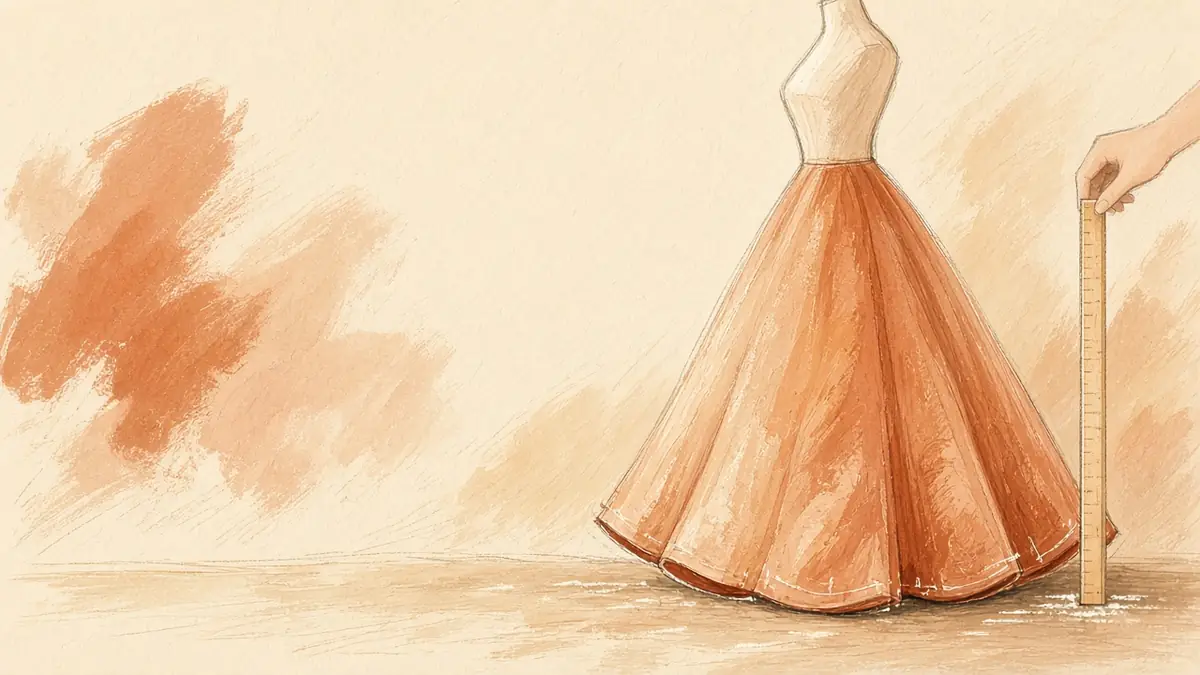
A 28" waist, 22" full circle skirt has a 166 1⁄4" hem. With 5% extra that is 175" of 2" strips — a 20" square, yielding 200".

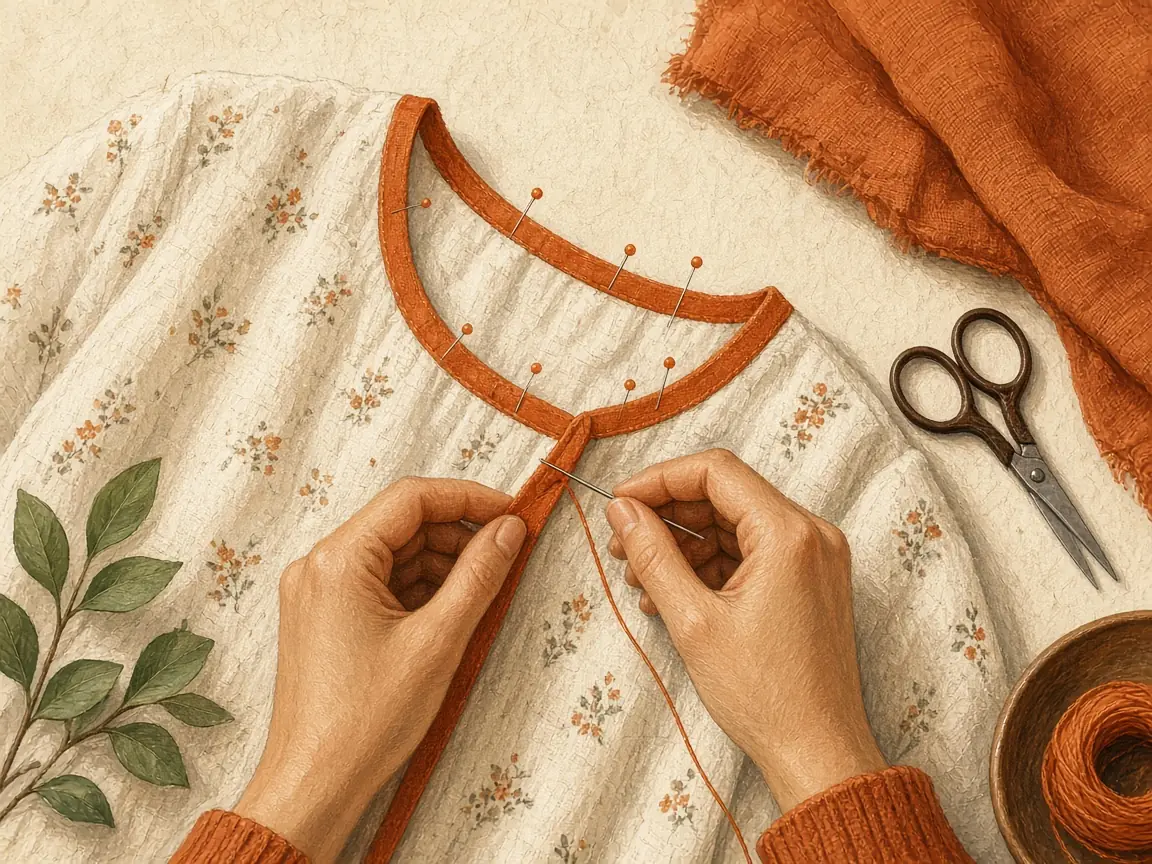
Illustration of hands hand-stitching rust bias binding around a cream blouse neckline

Neckline & armholes

Face a neckline

A neckline or armhole needs a short, narrow tape that bends tightly. 30" of 1 1/2" strips — enough for a neckline plus joins — needs only a 7" square and yields 32 5⁄8".

Shaping tip

Steam-press the tape into a curve that matches the neckline before you pin it; it lies flat without stretching the neck edge.

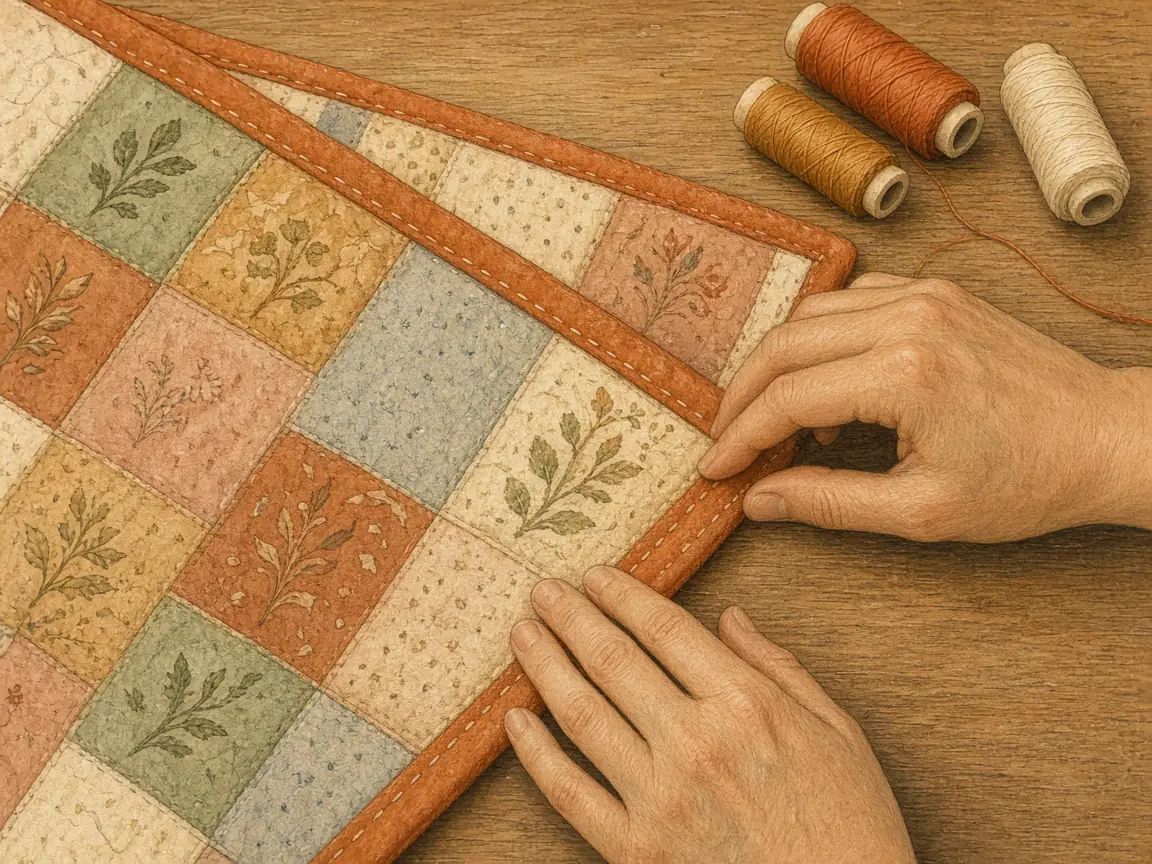
Illustration of hands folding rust binding over the edge of a patchwork quilt

Quilt binding

Bind a throw quilt

A 50" × 60" throw has a 220" edge; add 10" for corners and the join and you need 230" of 2 1/2" binding — one 25" square, yielding 250".

Bias or straight grain?

Straight-grain binding is fine for square corners; bias binding wears longer on the folded edge and is required for scalloped or rounded quilts.

Worked examples

Real calculator output

Worked example

Default: 5 yards of 1/2" double fold

Tape length needed
180"
Strip width
2"
Open in calculator

Result

Square to cut
20" (exact 19.44")
Tape it yields
200"
Single fold
1"
Double fold
1⁄2"

Worked example

Lots of wide binding

Tape length needed
300"
Strip width
2.5"
Open in calculator

Result

Square to cut
29"
Tape it yields
336 3⁄8"
Single fold
1 1⁄4"
Double fold
5⁄8"

The square grows with the square root of the length: about 1.7× the tape needs only a 29" square instead of 20".

square side = √(length × strip width × 1.05), rounded up
yield = side² ÷ strip width

The area of the square equals the area of the tape (length × width). For the default: √(180 × 2 × 1.05) = 19.4" → 20", and 20"² ÷ 2 = 200.0" of tape.

Tips

Tips for smooth bias binding

  • Starch before marking

    Lightly starch and press the square first — bias edges stretch easily once cut.

  • Mark on the wrong side

    Use a long quilting ruler and a fine chalk or pencil line so the spiral cut stays even.

  • Use a tape maker

    Feed the strip through a bias tape maker and press as it comes out for perfectly centred folds.

  • Pre-shape curves

    Steam the tape into a curve before stitching it to a hem or neckline — no ripples.

  • Measure the hem first

    Get the exact hem circumference from the circle skirt calculator or the hem helper above.

  • Leave a tail

    Start stitching 6" in from the end so you have room to join the tape neatly.

Frequently asked questions

How much bias tape do I need for a circle skirt hem?

The hem of a full circle skirt is 2π × (waist radius + length). A 28" waist and 22" skirt has a hem of about 166 1⁄4", so plan for around 175" of tape.

What size square makes a yard of bias tape?

For 2" strips, a 9" square makes about 40 1⁄2" — a yard with a little to spare.

Why cut bias tape at 45 degrees?

Fabric cut at 45° to the grain stretches and bends, so the tape follows curves without puckering.

What strip width makes 1/2 inch double fold bias tape?

Cut 2" strips. Single fold is half the strip width and double fold a quarter, so 2" gives 1" single fold or 1/2" double fold.

How do I calculate bias tape for a quilt?

Add the four sides and about 10" for corners and the join. A 50" × 60" throw needs 230"; with 2 1/2" strips that is a 25" square.

Can I make bias tape without a continuous square?

Yes — cut separate 45° strips and join them with diagonal seams. It works for short lengths, but takes more seams and fabric than the continuous method.

Ready to cut your bias square?

Enter the length and strip width — get the square size, the tape it yields and the fold widths in seconds.